Technical Insights | Peter Lenk, Technical Director, OAG
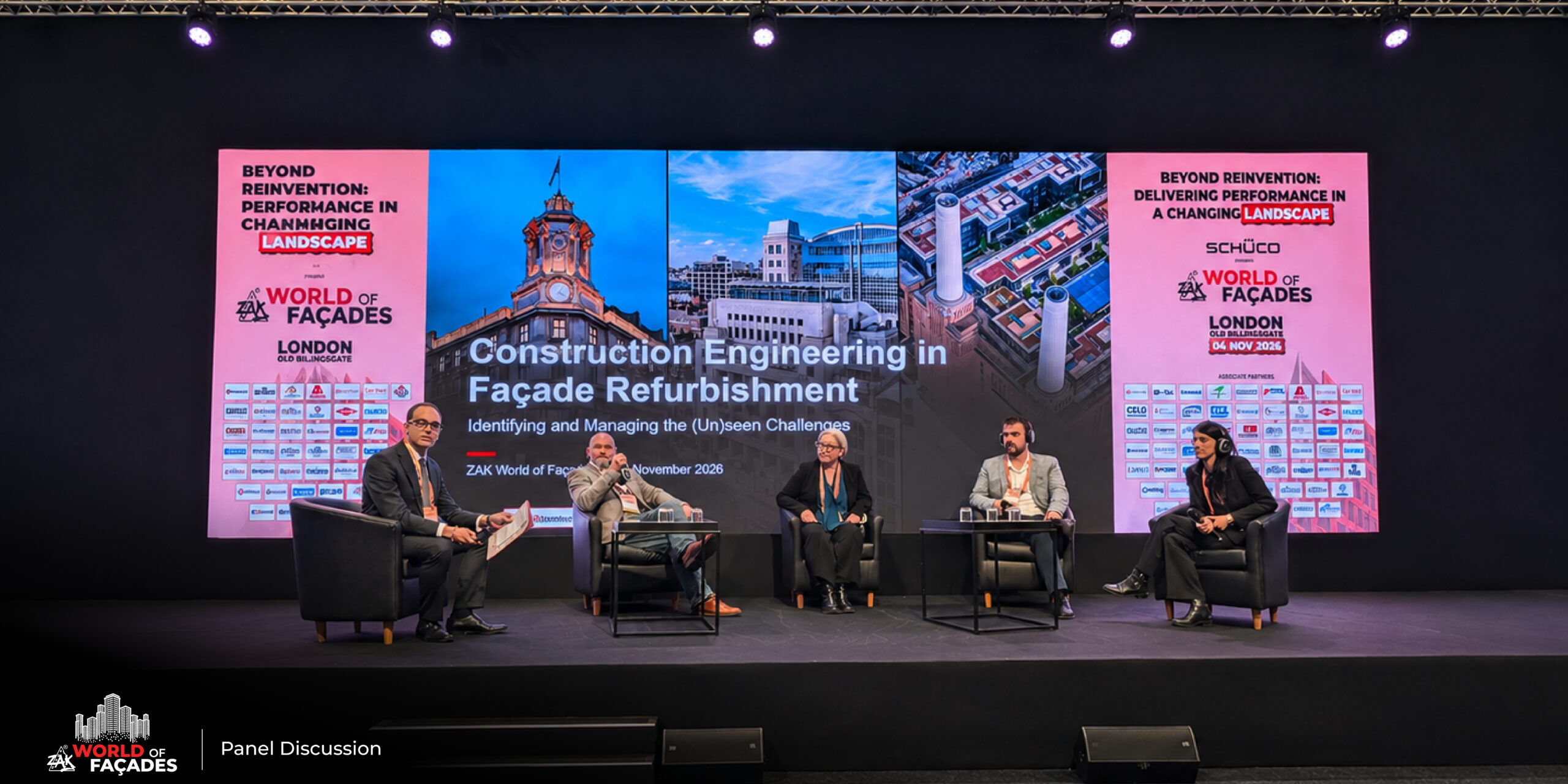
Following his participation at Zak World of Façades London on 4 November 2026, where he joined an expert panel discussing Construction Engineering in Façade Refurbishment: Identifying and Managing the Unseeen Challenges, OAG’s Technical Director, Peter Lenk, shares his perspective on the technical challenges of refurbishing existing buildings and the importance of early specialist involvement.
Building refurbishment projects are rarely straightforward. Behind existing façades and structures lie challenges that can significantly influence design, programme and delivery, from undocumented alterations and structural movement to innacurate record information and unforseen site conditions. Yet some of the greatest challenges aren’t necessarily unexpected discoveries, but known issues that aren’t addressed early enough. With growing emphasis on building retention, adaptive reuse and sustainable redevelopment, early technical collaboration is becoming increasingly important.
Building on the themes explored at Zak World of Façades, we asked Peter about the challenges of working with existing buildings and how earlier specialist involvement can help reduce project risk:
Indecisiveness and late decisions – Prolonged reviews and unresolved technical decisions can significantly impact programme, procurement and cost. Delaying difficult decisions does not remove the risk; it simply pushes it further into construction, where fewer options are available.
Existing fabric and unseen conditions – Understanding the actual condition, geometry, materials and performance of the existing building, including deterioration, undocumented alterations and construction inaccuracies.
Over-specification – Recognising product and system limitations, what manufacturers can realistically provide and warrant and what is technically achievable and buildable.
Warranties and commercial constraints – Balancing technical requirements with what manufacturers, suppliers and insurers are prepared to warrant or accept commercially.
Buildability – Considering fabrication and installation limitations, access, sequencing and realistic site tolerances. A technically sound design must also be practical to manufacture, install and adjust to the imperfections of an existing building.
Surveys and investigations – Thorough surveys, laser scanning, intrusive investigations and verification of existing structures and interfaces are essential. Existing records should inform the design, but never replace verification of actual site conditions.
Interfaces – Understanding how the new façade interacts with the existing structure, secondary steelwork, substrates, waterproofing and adjacent systems. Interfaces are often where assumptions and responsibilities overlap and where problems arise.
At 65 Gresham Street, extensive inspection and testing during the PCSA stage helped assess the existing 25-year-old façade systems, informing the retention and upgrading of existing glazing and aluminium frames while supporting the project’s sustainability objectives and proposed warranty strategy.
Challenging early assumptions – Fundamental design decisions can become fixed around unverified assumptions relating to existing geometry, substrate capacity, interfaces, movement or condition. These become increasingly difficult and costly to change as the project progresses.
Influencing design decisions – Façade contractors are often engaged at tender stage or late Stage 4, when key decisions have already been made. Earlier involvement allows specialist knowledge to shape the design principles, rather than simply resolving problems during construction.
Collaboration – Architects, structural engineers, façade engineers and specialist contractors need to challenge assumptions collectively and as early as possible. This provides greater flexibility to resolve issues before they impact construction.
Maintaining a degree of design flexibility, particularly around setting out, material performance and movement, is equally important. Developing a robust tolerance accommodation strategy early in the process can help manage unexpected site conditions and reduce pressure on the design as the project progresses.
As the construction industry increasingly prioritises the refurbishment and reuse of existing buildings, understanding the technical complexities of façade adaptation and replacement has never been more important.
At OAG, our experience across complex refurbishment projects reinforces the value of early engagement, detailed technical assessment and collaborative design development.
By working closely with clients, architects, engineers and main contractors from the earliest stages, we can help identify potential challenges, explore practical solutions and support more informed decision-making throughout the project lifecycle.
Successful refurbishment isn’t about eliminating every unknown. It’s about addressing the known challenges before they become costly problems.